The Sacred Tree
of Civilization
First, an honest question to yourself: who are you, beyond the title and the role you were given? Then, an open thought experiment: what could grow if many people began to live this way?
No timetable. No coercion. No business model — just an invitation to think.
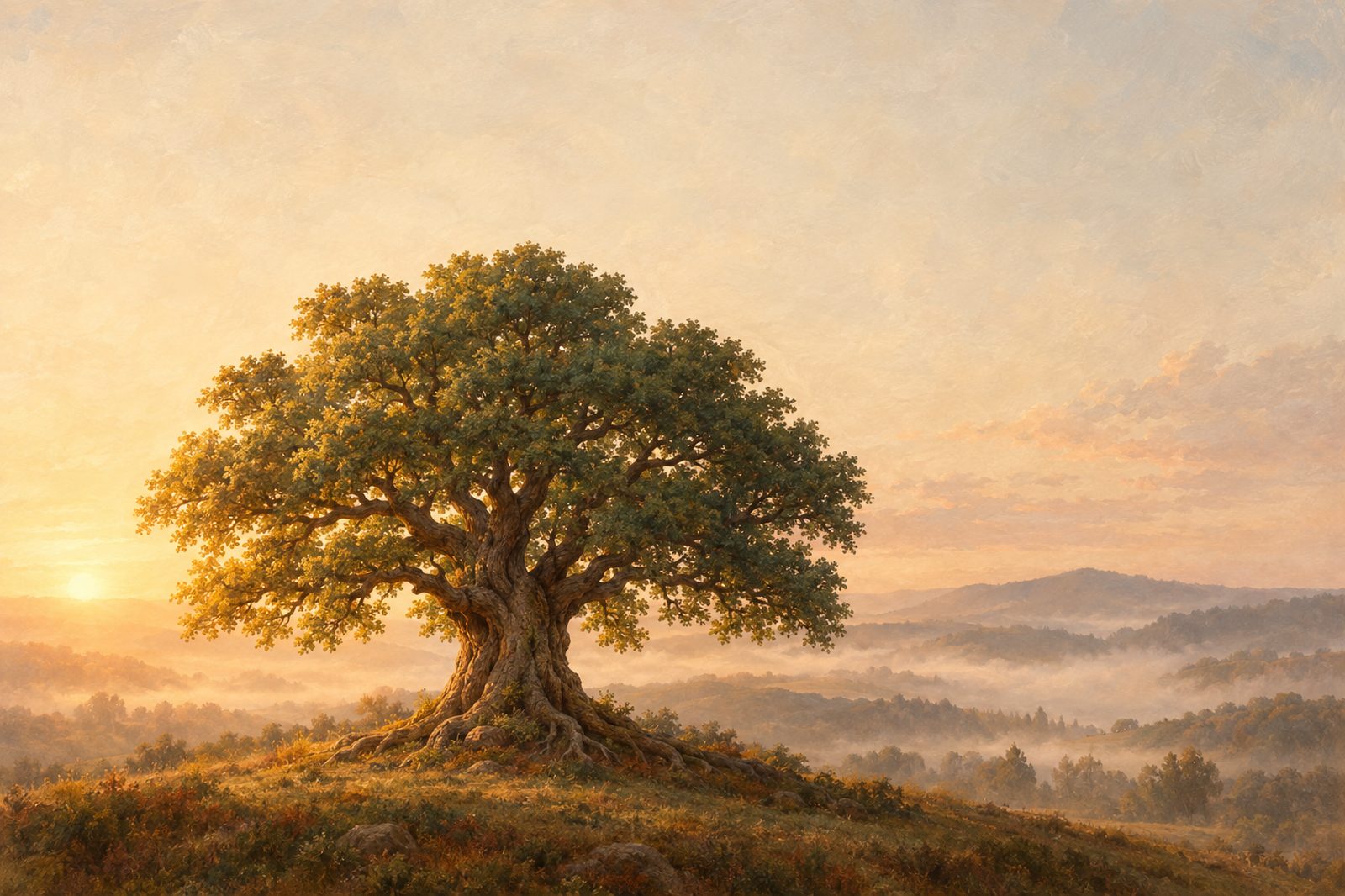
Two questions, one image: the tree instead of the pyramid
Most of us organize ourselves in pyramids — few at the top, many at the bottom. The Sacred Tree proposes a different image: roots (values), trunk (structure), branches (communities), and leaves (people with their own signature). Not "What position do you hold?" but "What role do you carry — and how does it serve the whole?"
What it is
A personality and relationship consultation built on honest self-knowledge — and an openly framed thought experiment about what society could grow from it, if many people were to live this way.
What it is not
Not a piece of legislation, not a prophecy, not a timetable, not coercion. No one is classified by origin or birth characteristics — assignment happens exclusively voluntarily, by you yourself.
Who it's for
For you, if you want to clarify your own signature, your relationships, or your role as a parent — and for anyone interested in new models of society and questions about the future.
Personality consultation that starts with you
Part I is a stand-alone basis for consultation — regardless of whether the thought experiment in Part II interests you. The starting point is always your own honest inner sense.
- Signature: your individual combination of personality type, role profile, and life phase.
- Relationship matrix: why some connections feel easy and others create friction — without assigning blame.
- Parenthood: accompanying children without turning them into projects that have to succeed.
- Role-conscious economy: rethinking work and value — beyond title and position.
"No biological or bureaucratic mechanism determines your type — you recognize and confirm it yourself, with the freedom to be wrong and to reposition yourself."
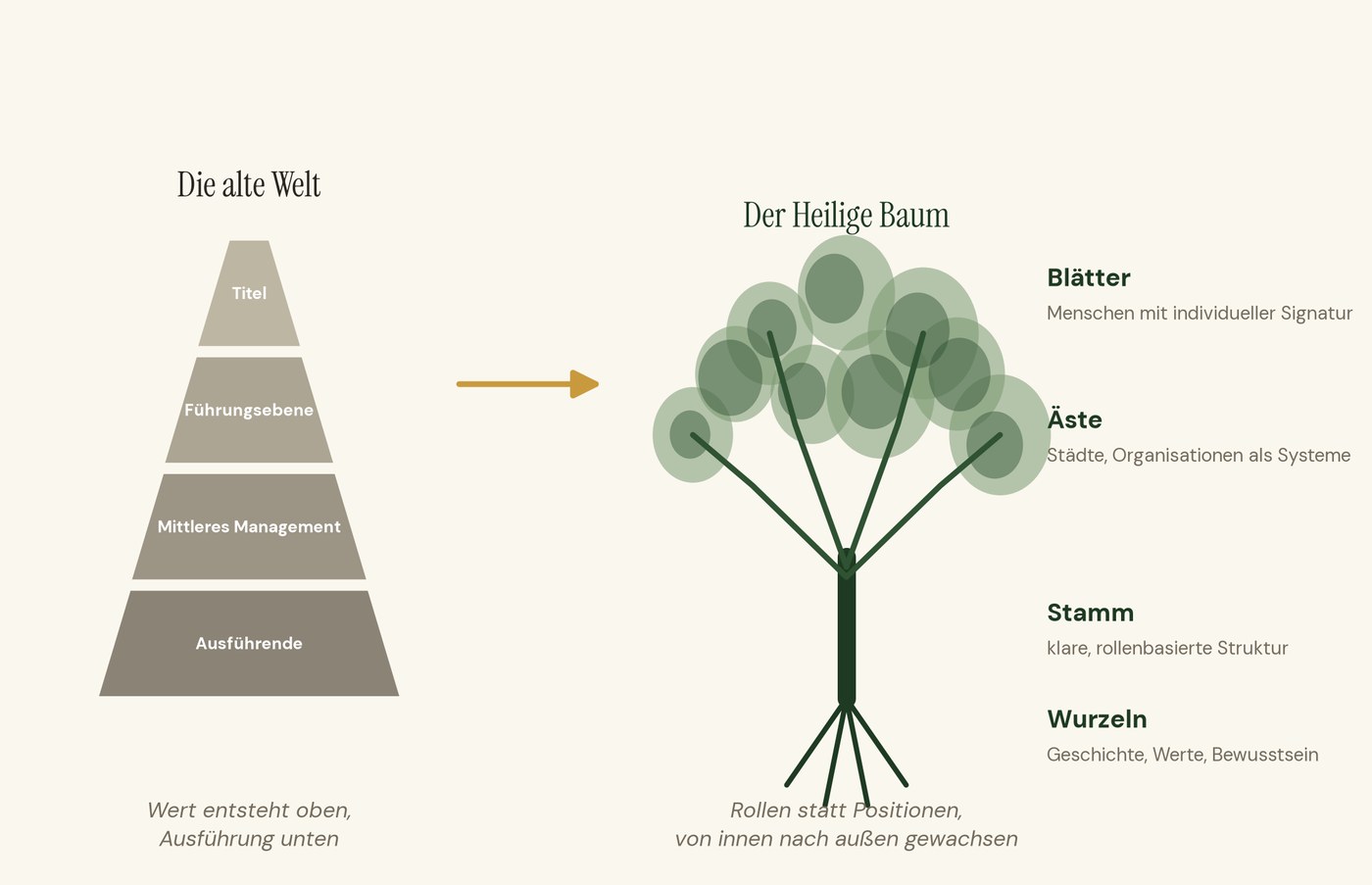

What if many people lived this way?
Part II is explicitly framed as a utopia, not a blueprint: a picture, the way one imagines a better future, in order to see where one's own small steps might lead.
- Role instead of origin: power follows the role, not status, nationality, or volume.
- Democracy with fit: freely elected, but only filled by people whose type matches the role.
- Equal rank: all 16 personality types are needed — none stands above another.
- Revisable at any time: every person can choose a new role over the course of their life.
This idea belongs to no one — and is free to spread
There is no consulting business here, no booking, no subscription. The idea is meant to spread the way a seed spreads — through people who pass it on because it gave them something.
Read it yourself
Read the PDF for yourself alone — as an impulse for your own self-knowledge, your relationships, or your role as a parent.
Pass it on
Send the PDF to someone the questions inside might fit right now — with no obligation at all.
Use it as an AI foundation
Load the PDF as a knowledge base into an AI conversation and let it question you about your own signature from there.
The complete book — free as a PDF
Both parts, all worksheets, diagrams, and appendices in one continuous coaching edition. To read for yourself or as a basis for an AI-assisted conversation.